
Historical Background of Metaverse
This journey started with the Internet simply allowing people to send emails and chat on BBS (Bulletin Board System) message boards. In 1989, Tim Berners-Lee created the World Wide Web to connect the Internet through a web browser, which allowed for the creation of millions of different websites and is still growing every day. This all later created things like Yahoo and Google, leading to the advent of Web 2.0 for user-generated content like blogging, which eventually morphed into social media. Today, we care about using different apps and websites for connection through the Internet. The concept behind the Metaverse is to create new online spaces for more multidimensional interactions for people by enabling an immersive experience instead of just viewing. We are starting to think about the Metaverse as the place for all possible resources to come together, but not something whose final form exists yet; it will take a few more years. However, technological limitations will decrease with time as Internet speed and hardware resources will grow more advanced. These innovations are being invented on the foundation of the Internet. Living today, we use an app-based layer that allows us to engage through apps on smartphones like Facebook, Twitter, Snapchat, Zoom, Instagram, and so on. The upcoming layer for connectivity is the Metaverse. With the haptic feedback using wearables, sensory experiences like touch can bring more realism with a wider adoption.
Metaverse
Metaverse is an upcoming transformative technology that will impact our future society with immersive experiences. The recent surge in the adoption of new technologies and innovations in connectivity, interaction technology, and artificial realities can fundamentally change the digital world. The Metaverse concept is the most recent trend to encapsulate and define the potential new digital landscape. However, with the introduction of 5G with high speed and low latency advancements in the hardware and software with the graphics power to display millions of polygons in 3D and blockchain technology, this concept is no longer fiction. This transition from today’s Internet to a spatially embodied Internet is, at its core, a transition from 2D to 3D interactions taking place in multiple virtual universes. In recent years, augmented virtual reality has created possibilities in the private and professional spheres. The new Virtual Reality (VR) headsets and Augmented Reality (AR) glasses can provide immersion in the physical sense. Technology must offer realistic experiences for users to turn this concept into reality. This paper focuses on the potential use cases and benefits of the Metaverse as a tech for good. The research paper outlines the potential areas where a positive impact could occur, highlights recent progress, and discusses the issues around trust, ethics, and cognitive load.
Potential of Metaverse at Workplaces
COVID-19 brought a forced work-from-home strategy, which later turned into a hybrid model of working as a new normal. Also, a four-day working week is being trialled in different parts of the world and is considered a more effective and mental health friendly option. As the world has adopted an approach of hybrid working strategy, interest in the Metaverse increases and its capability of connecting employees in the future workplace will be more obvious. With increasing innovations in AR and MR technology, the way to work and socialize can be transformed fundamentally. Figures 3 and 4 have explained the Metaverse concept for the workplace using Horizon Workrooms.
Metaverse Application in Education
Metaverse’s applications in education include, but are not limited to, virtual 3D classrooms, simulated real-life situations, digital learning in a remote setting, interdisciplinary learning, virtual campus tours, events, and collaborative activities. It can help to create powerful immersive learning experiences, gamification, hands-on learning practices, and improve learning speed. By bringing the concept of social presence, Metaverse can help students to meet and interact virtually with other students and teachers in 3D virtual classrooms. Metaverse’s ability to replicate real-life situations where students can conduct scientific experiments can revolutionize STEM learning, especially in resource-constrained environments.
What is a metaverse avatar?
Avatars are digital representations of yourself in the metaverse, tied to your identity or digital account. They can take the form of humans, animals, or even inanimate objects. In professional settings, human avatars dressed in business attire are commonly chosen. However, as the metaverse evolves, avatar fashion is expected to evolve as well. Metaverse avatars offer a new level of flexibility compared to avatars on other platforms. They can seamlessly transition between different virtual worlds within the metaverse, carrying over your chosen appearance and becoming your identity in that virtual universe.
The role of avatar in metaverse
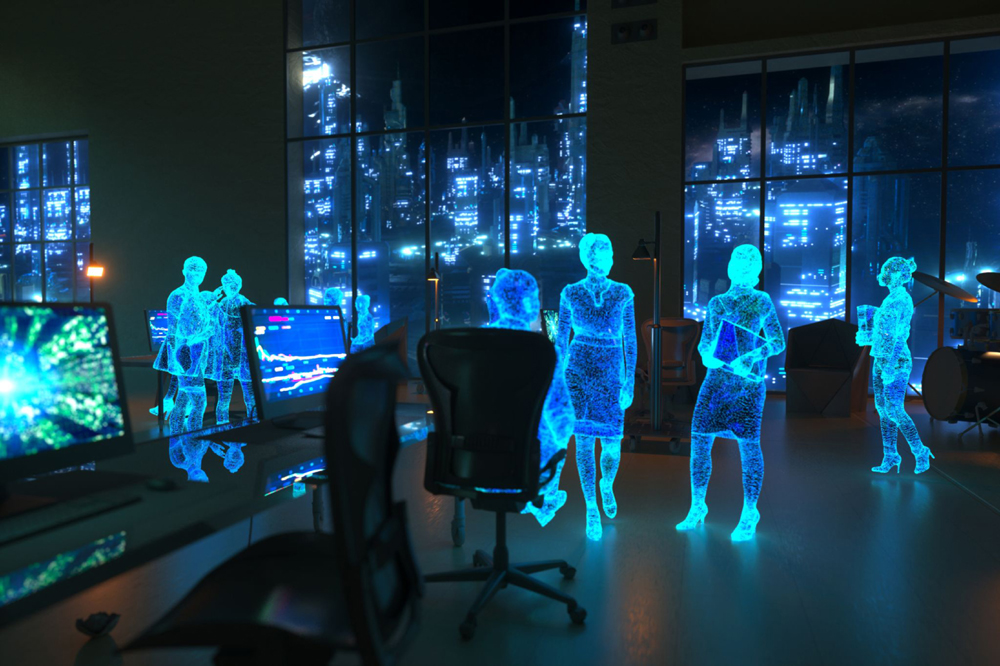
Digital avatars metaverse play a crucial role in enhancing user experiences by serving as virtual embodiments that enable seamless navigation, interaction, and participation in immersive virtual environments. Metaverse digital avatars are the ones responsible for:
- fostering social connections;
- contributing to dynamic interactivity.
- empowering users to express their unique identities.
- forging meaningful social bonds.
- exploring diverse virtual worlds and experiences within this transformative digital landscape.
VR avatars (virtual reality avatars)
Typically used by virtual reality users, avatar in virtual reality allow users to view the virtual environment from the perspective of their avatar. However, due to limited tracking capabilities, avatar in VR often lack lower body representation and focus on the upper torso and arms. These avatars incorporate face-tracking capabilities to facilitate collaboration and express emotions. Platforms such as Meta’s Horizon Worlds, Microsoft’s AltspaceVR, and Spatial commonly utilize virtual reality avatar, which are optimized for older systems and offer a first-person perspective for users.
2D avatars
2D avatars were among the earliest forms of metaverse avatars, typically appearing as flat representations of the user. These avatars are commonly utilized within 2D environments and often take the form of a picture or pixel-based representation of an individual. They bear resemblance to the player representations found in older video games with 8 or 16-bit graphics. While less immersive compared to their 3D counterparts, 2D avatars retain a nostalgic charm and are well-suited for certain contexts within the metaverse.
3D avatars
3D avatars now offer users a fully humanoid form that can be observed from various angles, providing a more immersive and realistic experience. These avatars encompass intricate details such as hair, skin tone, and other lifelike features, further enhancing the visual fidelity and expression available to users in the metaverse.
Full Body Avatar
Full-body avatars represent a significant advancement in metaverse avatars, as they utilize sensors to capture and replicate the user’s entire body movements in virtual spaces. These avatars go beyond hand tracking and extend to recognizing leg movements, enabling users to interact more naturally and freely within the digital realm. While currently limited to a few VR games and requiring specific hardware for full-body tracking, the use of full-body avatars is expected to expand in the future.
They offer enhanced:
- mobility.
- realism.
- immersion.
These makes them valuable for applications such as gaming, virtual reality experiences, combat simulations, concerts, and other forms of media production within the metaverse. The incorporation of full-body avatars is a testament to the evolving capabilities and potential of metaverse technologies.
Human like avatars
Human-like avatars are a prevalent type of metaverse avatar that closely resembles real-life individuals. These avatars are designed to replicate human features, including facial expressions, body proportions, and movements, providing a sense of familiarity and relatability. Human-like avatars have become a popular choice for users in the metaverse, as they allow for a more seamless transition between the virtual and physical worlds. With advancements in technology, human-like avatars can now capture subtle nuances in facial expressions and gestures, further enhancing the immersive and realistic nature of the metaverse experience.
Hologram technologies
A Hologram is a virtual 3D image formed by the interference of light beams reflecting from the real physical objects and people. Holograms can be used in healthcare, defence, education, and many other industries. With holographic technology, doctors and surgeons can process body images and convert them into 3D images with advanced depth and views. This enhances diagnostics and improves treatment plans. In education, holograms can make learning and teaching so much easier, especially now with hybrid learning taking off. It can help to bring in more conceptual clarity, enable visualization of abstract concepts, and ensure efficient communication between learners and educators. In defence, holographic technology will allow soldiers to see through smoke and around corners and will enable 3D terrain maps projected onto their field of vision at the click of a button. All these use cases can be enabled with state-of-the-art Private Wireless technology which provides higher bandwidths, faster speeds, broader coverage, and most importantly lower latency. Latency is the lag we see sometimes during video streams and video calls. For certain use cases such as recording and streaming previously recorded events, higher latency may be perfectly acceptable, but with real-time video communications, virtual reality, and holography, having a high latency can have a significant impact on user experience.
What Is Web 3.0?
The third generation of the World Wide Web (WWW), referred to as Web 3.0 or Web3, emphasizes instantaneous immersion in the digital world. This version of the internet emphasizes personal data ownership and the use of blockchain technology and cryptocurrencies. Web 3.0 is currently in the early stages of development, but its goal is to build an open, decentralized internet platform that offers consumers increased value and security. The intention is to create a more user-centric internet where people are in charge of their data and may conduct peer-to-peer transactions without depending on centralized entities. Web 3.0 technologies are expected to be distributed, trustless, and open. Platforms for content creation will be built using open-source technologies, guaranteeing accessibility and transparency.Everyone will adhere to Zero Trust principles in a trustless environment, and network protection will reach the edge. This implies that users, devices, and services can interact without requiring permission from a single authority.Thanks to blockchain technology, people can communicate directly with one another in the next phase of the internet. Users can connect by joining Decentralized Autonomous Organizations (DAOs), which are organizations managed and owned by their community. A network of publicly accessible smart contracts housed in a blockchain under the control of a decentralized network of nodes will safeguard user data.
Differences between Web3 and metaverse
The biggest difference between the two technologies is that people use Web3 to access the metaverse, much like how an automobile uses a road. Web3 is about decentralised ownership and control and putting the web in the hands of its users and the community. The metaverse, on the other hand, is a shared digital reality that enables users to connect with each other, build economies and interact in real time — and it doesn’t care who owns it. Web3 is also built on blockchain and cryptocurrencies, while the metaverse uses technologies such as AR/VR and digital currency. This is due to Web3 being decentralized and having no major corporate influence or control. The two also differ in how they are used. Web3 is a new set of standards for how the internet should be used and governed. The metaverse is about gaming, social media, retail and other experiences.
Common ground between Web3 and the metaverse
Web3 and the metaverse are inseparably linked to each other. The metaverse will continue to exist in surface and deep webs, even though Web3 is still frequently referred to as decentralized; however, the metaverse will remain centralized in terms of social media controlling platforms. Both are built on advanced technologies that will evolve. The semantic web is common ground for both the metaverse and Web3. AI — another key component of both technologies — will be integral to building a sophisticated user interface. In a technological sense, many of the advancements made with blockchain create common ground in both technologies. Every new blockchain concept is assessed as a potential module to integrate the Web3 engine that will power metaverse goods and services. Web3 and the metaverse are in early stages. The final products will come years from now and may be quite different, as technology doesn’t always match the vision of its use.