

AI in Health & Safety
AI is rapidly developing in capability and is a transformative technology. It can create and exacerbate health and safety risk but also has the potential to bring real benefits for health and safety. It is transforming health and safety by offering both opportunities and challenges. AI can enhance workplace safety through hazard monitoring, risk prediction, and streamlining compliance, while also raising concerns about algorithmic bias and the potential for job displacement.
Pattern Spotting
The potential for AI to improve occupational health and safety comes from its capacity to scan massive volumes of information, picking out the important data and flagging up patterns. An AI programme trained on all your organisation’s near-miss observations and accident reports over the previous years would be likely to yield valuable insights, spotting trends that a health and safety practitioner might have to spend hundreds of hours to find. In a recently announced study, researchers at Lund University in Sweden found that using AI to look for signs of cancer in breast screening tests provided the same degree of accuracy as analysis by skilled radiologists – based on 40,000 tests carried out by AI and the same number by humans. Using the AI to flag up abnormalities to a specialist substituted five month’s work by a radiologist.
A 2021 Policy briefing by the EU OSHA safety body noted that “new forms of AI-based monitoring of workers may also provide an opportunity to improve OSH surveillance, reduce exposure to various risk factors, including harassment and violence, and provide early warnings of stress, health problems and fatigue”. An example of improved surveillance is software currently available which plugs into organisational closed-circuit TV systems and uses AI to identify hazardous events and patterns such as near-misses involving pedestrians and vehicles, individuals missing their personal protective equipment and poor manual handling practice. In an ideal safety culture, at the advanced stages of the various cultural models such as the Bradley curve and the Hudson safety ladder, such events would naturally be brought to light and even corrected by employees themselves. But few safety professionals would claim their organisations had reached such an enlightened state and, in the meantime, the ability to identify hazard hotspots gives them a richer dataset without the impossible task of personally scanning hundreds of hours of footage.
The Role of Artificial Intelligence in Occupational Safety and Health Practices (OSH)
It has been feared by many that Artificial Intelligence (AI) may be taking over how we do business. However, AI has revolutionized the way businesses operate, transforming mundane tasks into efficient, data-driven processes. In today’s workplace, AI is no longer a futuristic concept—it’s an integral part of daily operations. AI plays a crucial role in enhancing occupational safety and health (OSH) practices. Let’s explore how AI benefits workplace safety:
1. Real-Time Monitoring and Hazard Detection: AI technologies, equipped with machine learning algorithms and predictive analytics, can monitor safety data in real-time.
2. Predictive Analytics for Risk Assessment: AI analyses large safety datasets, identifying patterns and predicting potential hazards. This empowers proactive accident prevention by addressing risks before incidents occur.
3. Behaviour Recognition and Intervention: AI can detect when workers do not follow safety protocols. It offers cost-effective learning opportunities in safety and health. Speech recognition and incident reporting are also facilitated by AI.
4. Algorithmic Integrity and Bias Mitigation: AI algorithms can be designed to minimize bias and ensure fairness. By addressing algorithmic bias, AI promotes equitable safety practices.
5. Efficient Incident Response: AI systems can recognize still images, situations, and objects related to safety incidents. This aids in timely and effective response to emergencies.
6. Multidisciplinary Research and Knowledge Sharing: OSH professionals can collaborate with AI experts to study AI adoption and evaluate its impact. Research should focus on how AI affects OSH across industries, wage categories and sociodemographic groups. In conclusion, AI is not replacing humans; it’s augmenting our capabilities. By leveraging AI responsibly, organisations can create a more efficient, innovative, and inclusive workplace. As previously mentioned, AI contributes to safer workplaces by providing real-time insights, risk assessment, and behaviour monitoring. As technology continues to evolve, responsible AI adoption will continue to enhance occupational safety and health for all workers.
AI in emergency response and disaster management
AI technologies are crucial in improving emergency response and disaster management. Intelligent systems can analyse vast amounts of data, including social media, to identify affected areas and assess the extent of damage during natural disasters. AI-powered drones and robots are deployed for search and rescue operations in hazardous conditions, helping to locate and aid victims efficiently. This capability significantly enhances the effectiveness of emergency response teams and reduces the time needed to mitigate the impact of disasters.
Challenges & Ethical Considerations
While the benefits of AI in health and safety are undeniable, there are also challenges and ethical considerations that must be addressed. Privacy concerns and data security are just two issues that need careful consideration. Ensuring transparency in AI systems, establishing robust regulatory frameworks, and promoting ethical AI practices are essential to mitigate these challenges.
Quentic Application for Reporting, Managing & Recording Incidents
Bring your health and safety management into focus with Quentic, a modular, cloud-based EHS platform that allows you to document, streamline and manage processes in a single, unified system. No more temporary fixes, tangled lists or endless spreadsheets. Quentic, has a centralized solution connecting teams, managing data, and driving operational excellence. With comprehensive tools to consistently review and improve working conditions, Quentic helps comply with global EHS regulations and stay up to date on legal changes and obligations. The software ensures you can minimize your liability, mitigating risks, and preventing incidents.
Working towards certification? The system covers, guiding you through the audit process, to eliminate non-conformities and improve standards. So, whether you’re working towards ISO 9001, ISO 14001, ISO 27001, ISO 45001 or ISO 50001, Quentic gives you total control over your management systems using a solution that’s officially verified by DEKRA Assurance Services. The Quentic Health & Safety Management System helps you flag risks, encourage active reporting and proactively prevent negative outcomes. No matter what your health and safety needs, Quentic can assist. Allowing you to combine purpose-built modules to create an EHS solution that truly meets your unique requirements. With a cloud-based solution, teams can save time because company-wide data is constantly updated. All accessible any time, and from any location, ensuring everyone in your organization has the tools they need to support safe, sustainable, and profitable operations.
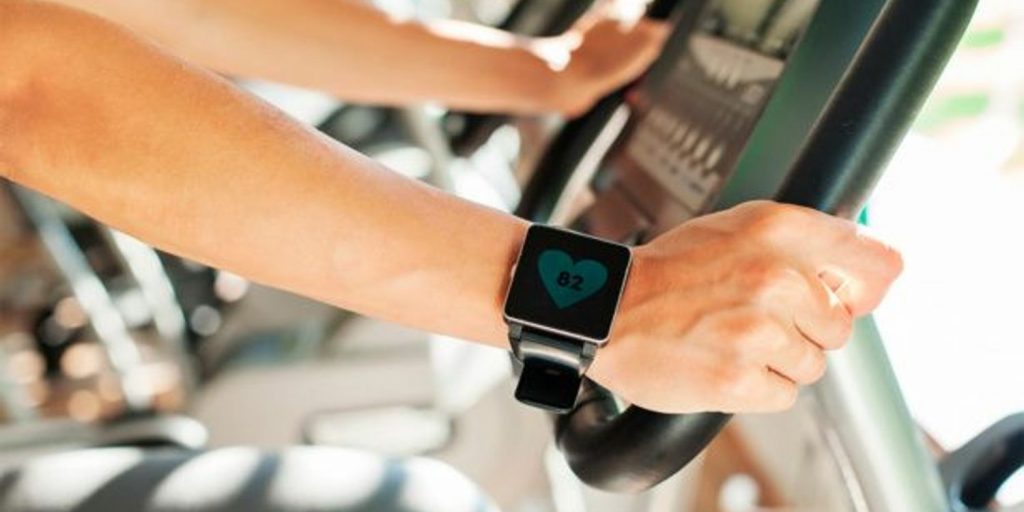
Heart rate monitoring for Worker Wellbeing
Smartwatches now go beyond tracking daily steps and calories burned. They include features such as heart rate monitoring! This is not only a good feature for runners and athletes, it’s great for people that have strenuous activities within their job role. By giving workers, the opportunity to monitor their heart rate, they have the ability to track their stress levels and physical exertion on site. For workers that struggle to have a break, or over do their physical limits at work, this can be a great way to manage their well-being more effectively and healthily when doing strenuous activities
Fall Detection monitoring and location trackers
Construction sites can be hazardous with various environmental factors impacting workers’ health. News sites aren’t
shy in posting about the consequences workers can now include a fall detection app which adds a layer of safety for anyone working on site. These apps can automatically alert contacts in case of accidents. This is a wonderful addition
for lone workers who don’t have the advantage of site managers being near to keep track of them. The same app can also have location tracker features, enabling supervisors to pinpoint the exact location of workers, ensuring prompt
assistance during critical situations.

What is wearable safety technology?
Wearable safety technology includes smart devices worn by employees that track health, fatigue, and environmental risks. These devices use sensors, AI, and real-time alerts to improve safety and well-being.
Common types of wearable devices include
Smart helmets – Detect hazards such as falling objects or temperature changes. Some models also monitor worker fatigue and dangerous hand movements. (Stanley Handling)
Fatigue monitors – Use biometrics to prevent accidents caused by exhaustion. Some wearable gloves now have sensors that detect excessive vibration exposure, reducing the risk of hand-arm vibration syndrome (HAVS). (Stanley Handling)
Smart vests – Protect workers from impacts, heat stress, and exposure to harmful gases. Some AI-powered vests can adjust their temperature automatically based on external conditions. (British Safety Council)
Location-tracking devices – Improve lone worker safety by ensuring they can be found in an emergency. These are particularly useful in warehouses and high-risk manufacturing environments. (Ubisense).
Benefits of wearable technology in safety
The key advantages of wearable safety technology include:
Real-time hazard detection – Alerts workers and managers to risks before an accident happens. Some AI-powered devices can predict potential incidents based on historical data. (British Safety Council)
Improved compliance – Supports health and safety audits with data-driven reports, allowing for better risk assessments and regulatory compliance (OH&S).
Worker well-being – Monitors fatigue, posture, and environmental conditions to reduce workplace injuries. Some exoskeleton wearables even assist workers with physically demanding tasks, reducing musculoskeletal strain. (British Safety Council).