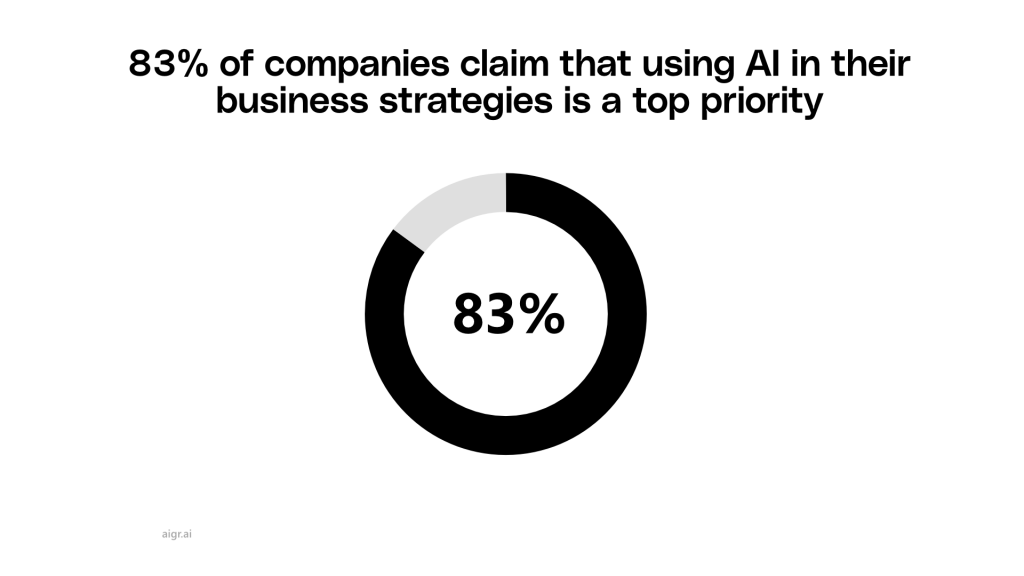

Humans Becoming Increasingly Dependent on Artificial Intelligence
As technology advances, humans increasingly depend on Artificial Intelligence (AI). AI is a rapidly growing field and has become integral to many aspects of our everyday lives. By automating mundane tasks, AI is allowing us to save time and energy for more meaningful pursuits. Its potential applications range from entertainment to healthcare, retail, and defence. With the rise of AI, it’s clear that humans will continue to rely on it to enhance their quality of life.
AI Dependency
As the world continues to progress in AI technology, humans increasingly depend on it. AI improves efficiency and accuracy in many industries, such as healthcare and finance. However, this reliance on machines has its downsides.
One of the key concerns with AI dependency is the potential for job loss. As more tasks become automated, fewer jobs may be available for humans. This could lead to significant economic disruption and social unrest. Additionally, relying heavily on machines could positively affect human decision-making skills.
Another issue with AI dependency is the potential for bias and discrimination. Machines are only as unbiased as their programming allows them, meaning they can still perpetuate harmful stereotypes or overlook essential factors in decision-making. This can seriously affect hiring practices or criminal justice systems where fairness and equity are critical considerations. Overall, while there are certainly benefits to using AI technology, we must proceed with caution when it comes to our growing dependence on it.
Growing Popularity of AI
Artificial Intelligence (AI) has become so pervasive that it is difficult to imagine our lives without it. With the growing popularity of AI, we have seen a significant change in how we interact with technology. From personal assistants like Siri and Alexa to self-driving cars, AI systems are revolutionising every aspect of our lives. One area where AI is particularly impactful is in the workplace. By automating repetitive tasks, companies can increase productivity while reducing costs. Additionally, AI-powered tools can help businesses make more informed decisions by analysing vast amounts of data quickly and accurately.
Despite all the benefits of using AI, there are concerns about its impact on jobs and privacy. As machine learning algorithms continue improving, many workers could be replaced by machines. Moreover, as these systems collect more data from individuals, there is a risk that this information could be misused or fall into the wrong hands.
Overall, while there are benefits to using artificial intelligence systems in our daily lives and at work, we must be aware of their potential drawbacks as well. As long as we approach these technologies cautiously and take steps to mitigate risks where possible – such as implementing robust cybersecurity measures – we can continue to enjoy the positive impacts they bring while minimising any negative effects they might have on society.

AI will grow between $17.1 trillion and $25.6 trillion annually
Artificial intelligence research is filled with dramatic forecasts. AI will affect almost 40% of jobs around the world, according to the International Monetary Fund. It will increase global GDP by $7 trillion or 7% over 10 years, predicts Goldman Sachs. Or it will grow between $17.1 trillion and $25.6 trillion annually.
Growth in AI Applications
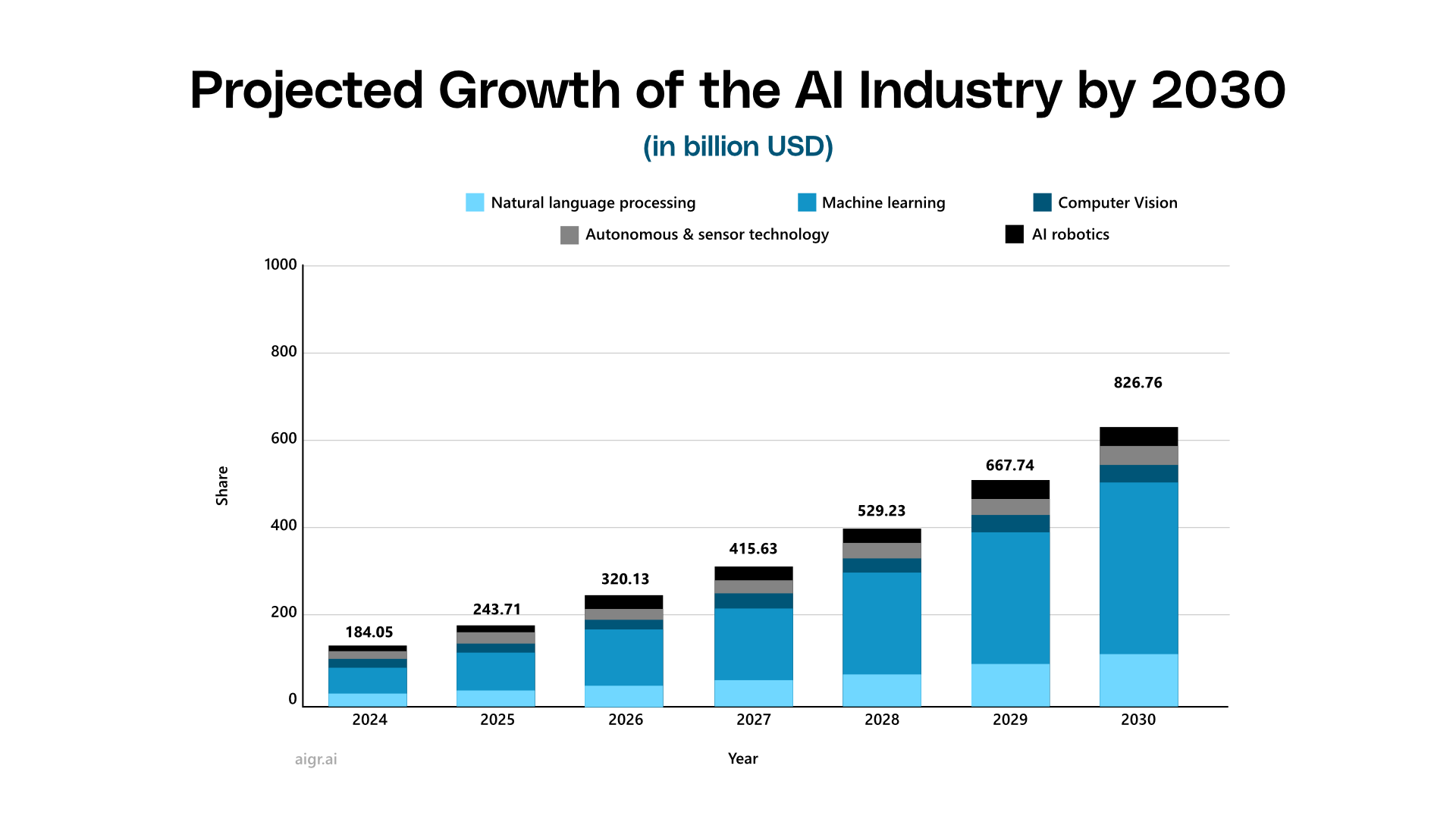
The AI app sector generated $4.5 billion in 2024, with more than half of this coming from ChatGPT. We estimate the AI app sector will surpass $150 billion revenue by the end of the decade and close to 700 million people used AI apps in the first half of 2025. ChatGPT was the most downloaded chatbot app in 2024 with 288 million downloads.
Other Applications
1. Microsoft Copilot, AI chatbot
2. OpenAI, AI research & development company
3. FaceApp, app for photo & video editing
4. Google Gemini, text & code generation
5. Adobe Firefly, image and text effects
6. Runway, video creation platform, like text-to-video
7. Waze, AI driven navigation map with real time traffic information
Customer preferences
The rise of Artificial Intelligence in the global market has been fuelled by a growing demand for personalized and efficient solutions. Consumers are increasingly looking for AI-driven products and services, such as virtual assistants and chatbots, to streamline their daily tasks and improve their overall experience. This trend is driven by a shift towards convenience and efficiency, as well as a growing reliance on technology in our daily lives. Furthermore, the adoption of AI is also driven by the desire for data-driven insights and decision-making, as companies look to capitalize on the vast amounts of data available in the digital age.
Trends in The Market
In the Artificial Intelligence Market, there is a growing trend of incorporating AI technology into various industries, including healthcare, finance, and retail. This trend is expected to continue as companies seek to streamline processes, improve efficiency, and enhance customer experience. Additionally, there is a rising demand for ethical and transparent AI solutions, leading to the development of regulations and guidelines. This trajectory highlights the increasing importance of responsible AI implementation and the potential implications for industry stakeholders who must navigate this evolving landscape.
Local Special Circumstances
In China, the Artificial Intelligence market is experiencing rapid growth due to the country’s large population and government support for technological advancements. With a strong focus on AI research and development, China has become a global leader in this field. Additionally, the country’s unique combination of a highly skilled workforce and a large consumer base has led to the successful implementation of AI technologies in various industries, such as healthcare, finance, and manufacturing. However, strict government regulations and concerns over data privacy have also impacted the market’s growth in China.
Underlying Macroeconomic Factors
The rapid growth of the Artificial Intelligence market is largely influenced by macroeconomic factors such as advancements in technology, government support, and investment in infrastructure. Regions with favourable regulatory environments and strong investment in AI technologies are experiencing faster market growth compared to areas with regulatory barriers and limited funding. Furthermore, the increasing demand for AI solutions in various industries, such as healthcare, finance, and retail, is driven by global economic trends and the need for efficiency and cost reduction. As economies continue to evolve and embrace AI, the market is expected to witness significant growth in the coming years.
The Evolving AI Investment Landscape
The concentration of AI investment in large private tech firms will significantly influence innovation and competition within the technology sector over the coming years. This trend creates both opportunities and challenges for the broader ecosystem.
Major tech companies possess substantial financial resources, enabling significant investment in AI research and development. This accelerates technological advancement and brings sophisticated applications to market more rapidly. These firms attract top-tier talent through competitive compensation and cutting-edge projects, potentially consolidating expertise within a few organisations.
Some large companies contribute to open-source AI projects, fostering collaboration that benefits the broader tech community. However, their significant capital and resources can lead to market concentration, potentially stifling competition from smaller entities and startups. The high costs associated with AI development, including data acquisition and computational power, create substantial barriers for new entrants, limiting market diversity. Increased dominance by a few players attracts regulatory scrutiny, potentially leading to antitrust investigations aimed at promoting fair competition.
Table of Industries
| Industry | Baseline | Additional AI Contribution |
|---|---|---|
| Accommodation and Food Services | $1.5 trillion | $489 billion |
| Agriculture, Forestry, and Fishing | $554 billion | $215 billion |
| Arts, Entertainment and Recreation | $453 billion | $87 billion |
| Construction | $2.76 trillion | $520 billion |
| Education | $1.06 trillion | $109 billion |
| Financial Services | $3.43 trillion | $1.15 trillion |
| Healthcare | $2.26 trillion | $461 billion |
| Information and Communication | $3.72 trillion | $951 billion |
| Manufacturing | $8.4 trillion | $3.78 trillion |
| Other Services | $535 billion | $95 billion |
| Professional Services | $7.47 trillion | $1.85 trillion |
| Public Services | $3.99 trillion | $939 billion |
| Social Services | $1.08 trillion | $216 billion |
| Transportation and Storage | $2.13 trillion | $744 billion |
| Utilities | $962 billion | $304 billion |
| Wholesale and Retail | $6.18 trillion | $2.23 trillion |
AI Reshaping Life Sciences: Intelligent Transformation, Application Challenges, and Future Convergence in Neuroscience, Biology, and Medicine
The rapid advancement of artificial intelligence (AI) is profoundly transforming research paradigms and clinical practices across neuroscience, biology, and medicine with unprecedented depth and breadth. Leveraging its robust data-processing capabilities, precise pattern recognition techniques, and efficient real-time decision support, AI has catalysed a paradigm shift toward intelligent, precision-oriented approaches in scientific research and healthcare. This review comprehensively reviews core AI applications within these domains. Within neuroscience, AI advances encompass brain-computer interface (BCI) development/optimization, intelligent analysis of neuroimaging data (e.g., fMRI, EEG), and early prediction/precise diagnosis of neurological disorders. In biological research, AI applications include enhanced gene-editing efficiency (e.g., CRISPR) with off-target effect prediction, genomic big-data interpretation, drug discovery/design (e.g., virtual screening), high-accuracy protein structure prediction (exemplified by AlphaFold), biodiversity monitoring, and ecological conservation strategy optimization. For medical research, AI empowers auxiliary medical image diagnosis (e.g., CT, MRI), pathological analysis, personalized treatment planning, health risk prediction with lifespan health management, and robot-assisted minimally invasive surgery (e.g., da Vinci Surgical System).
This review not only synthesizes AI’s pivotal role in enhancing research efficiency and overcoming limitations of conventional methodologies, but also critically examines persistent challenges, including data access barriers, algorithmic non-transparency, ethical governance gaps, and talent shortages. Building upon this analysis, we propose a tripartite framework (‘Technology-Ethics-Talent’) to advance intelligent transformation in scientific and medical domains. Through coordinated implementation, AI will catalyse a transition toward efficient, accessible, and sustainable healthcare, ultimately establishing a life-cycle preservation paradigm encompassing curative gene editing, proactive health management, and ecologically intelligent governance.